
Buying mulch during a Home Depot 5-for-$10 sale is a fast way to upgrade beds and save cash, but a big haul can turn into wasted product without a plan. This guide explains how to store new bags so they stay dry, how to move and load them safely, and step-by-step application methods that stretch every bag across your landscape.
Why the home depot mulch sale is great — and what goes wrong
The sale price is designed to move inventory fast. Shoppers buy in bulk, often without measuring or planning, then discover wet bags, torn packaging, or mildew from poor storage. A few simple habits prevent spoilage and keep the 5-for-$10 bargain from becoming a costly waste.
Storing home depot mulch: quick rules that save bags
Follow these storage rules the moment you get mulch home. They avoid soggy bags, mold, and insect attraction so your mulch lasts until you need it.
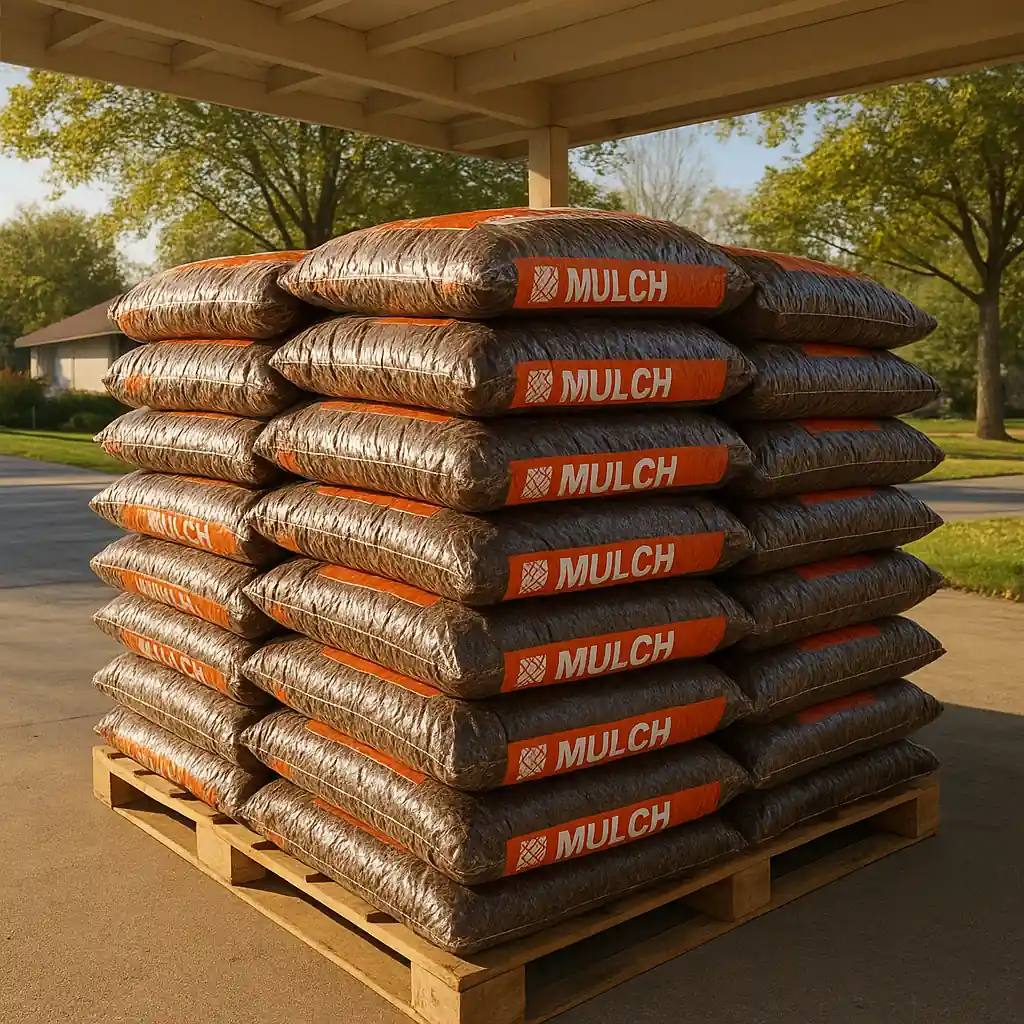
- Keep bags off the ground — use pallets, scrap lumber, or a tarp under a raised platform to prevent ground moisture from wicking into the bags.
- Store in a covered, ventilated spot — a garage, carport, or under a lean-to keeps rain off while allowing air to circulate; avoid sealed plastic enclosures that trap condensation.
- Rotate older bags to the front — first-in, first-out reduces the risk that an older bag sits until it degrades.
- Repair or re-bag torn packages immediately — small punctures invite pests and moisture; double-bag using heavy contractor bags if needed.
- Don’t stack too high — limit stacks to a manageable height so lower bags don’t get crushed and compacted.
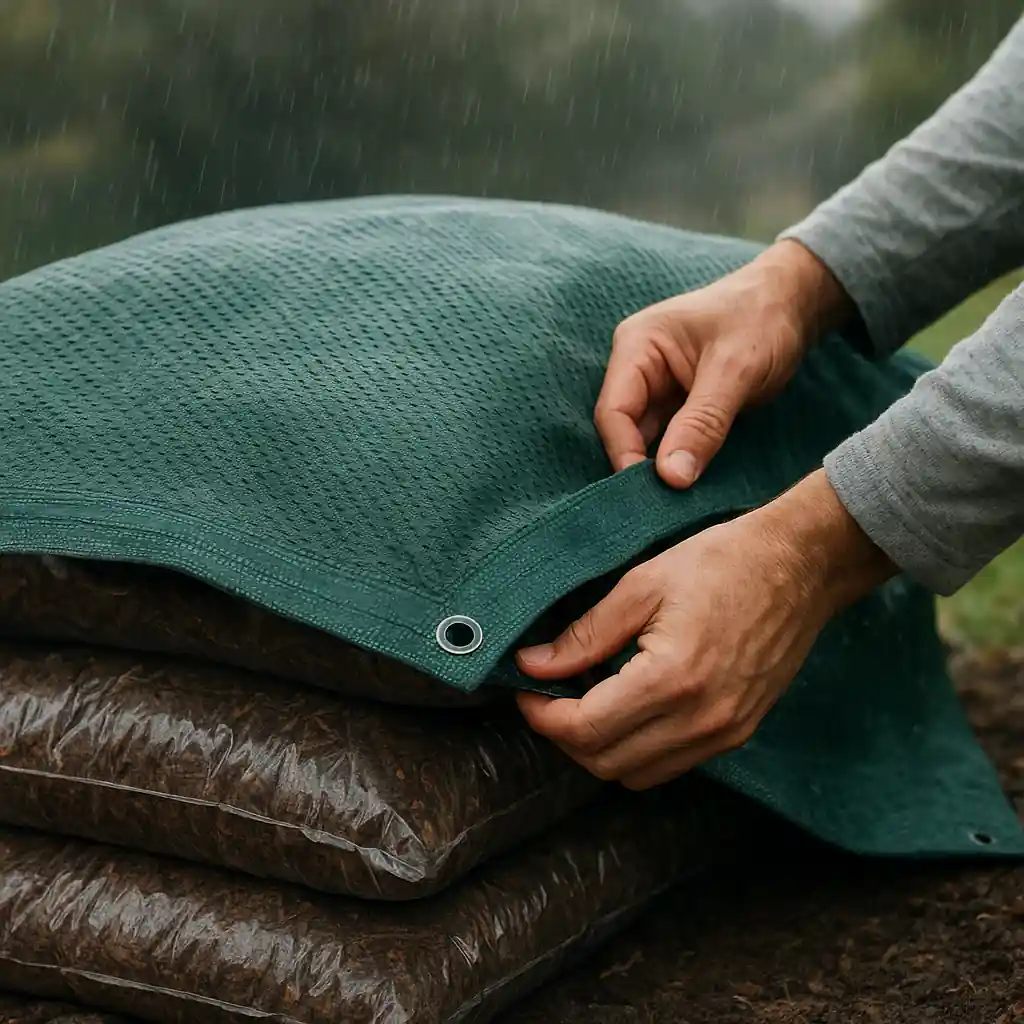
When storing on a driveway or exposed area, cover stacks with a breathable tarp anchored at the corners; tuck sides to allow air movement while shedding rain.
How long will mulch keep?
Properly stored hardwood and bark mulches can stay usable for several months. Dyed mulches may fade but remain functional. Watch for foul smells, visible mold, or insect infestations — those bags should be separated and used first or composted if compromised.
Transporting and pickup tips for the sale haul
Moving five or more bags requires a plan to avoid injury and damage.
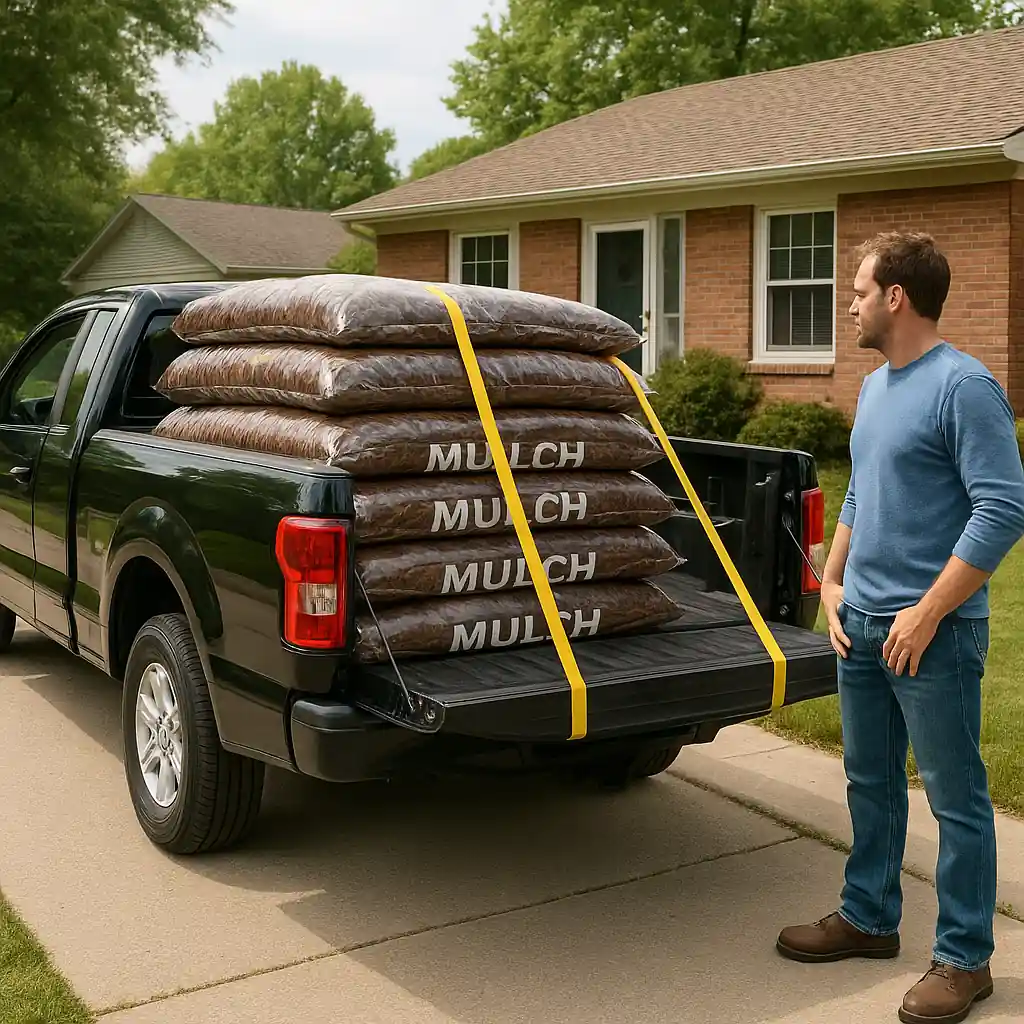
- Use a pickup or rent a small truck for large loads; avoid overstacking the roof of a car.
- Load wisely: place heavier items at the bottom, create a flat base with pallets or cardboard, and prevent shifting with straps or bungee cords.
- Consider Home Depot pickup or delivery options for large quantities — compare curbside pickup vs delivery costs and convenience before loading your vehicle. See our comparison for pickup and delivery choices for mulch /home-depot-mulch-sale-pickup-vs-delivery.
- If you plan multiple trips, keep new bags covered in the vehicle between stops to avoid condensation and rain exposure.
Applying home depot mulch like a pro
Proper application improves plant health, reduces weeds, and maximizes how far your sale bags go.
- Measure your area first — a quick calculation (area x depth) tells you how many bags you truly need; don’t rely on “eyeballing” at checkout. For a fast planning guide, visit /how-to-score-home-depot-mulch-5-for-10-guide.
- Recommended depth: 2–3 inches for flower beds, 3 inches for exposed soil; leave a 1–2 inch gap around tree trunks and plant crowns to prevent rot.
- Prepare beds: pull weeds, add a thin layer of compost if needed, and water thoroughly before mulching to lock in moisture.
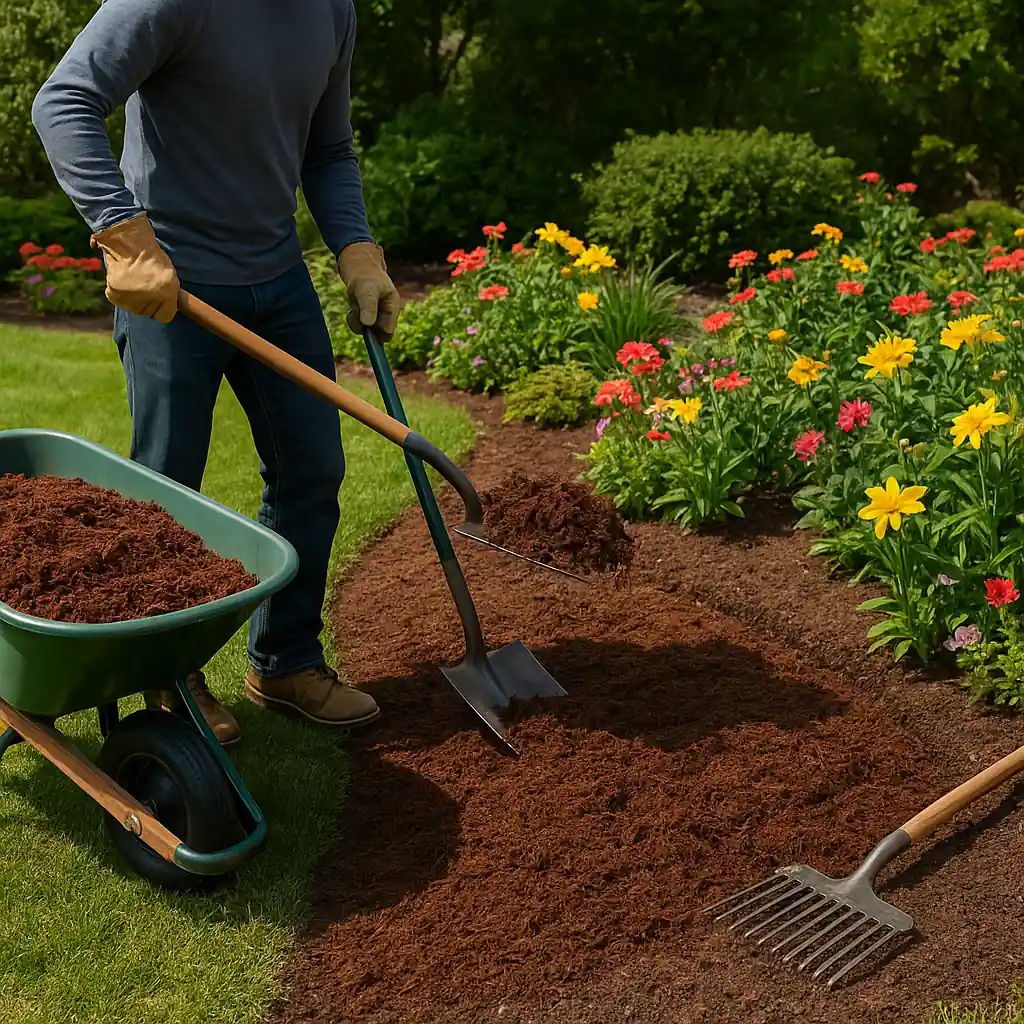
- Use tools: a wheelbarrow, a flat shovel, and a landscape rake speed the work and reduce bag handling. Spread mulch in thin layers and level with the rake for uniform coverage.
- Blend older mulch: if you have older bags, blend them with new product to avoid visible color or texture lines, creating a uniform appearance across the bed.
Saving more on application
Stretch your 5-for-$10 purchase further by using mulch in multiple areas: under shrubs, as a weed suppressant along walkways, and in compost piles to balance green materials. Save extra bags for seasonal refreshes instead of discarding them.
Safety, environment, and material choices
Choose the right mulch type for the job: hardwood and bark mulches last longer, while shredded hardwood or fine compost is better for vegetable beds. Avoid piling mulch against house siding or tree trunks. For ecological guidance on materials and soil health, review recommendations from the USDA and EPA: USDA and EPA.
How to manage extra bags — smart uses and disposal
If you end up with leftovers from a 5-for-$10 buy, don’t let them sit and go bad. Options include:
- Donate extra bags to neighbors, community gardens, or a local church landscaping project.
- Store properly for later seasonal top-ups if space allows.
- Use compromised bags as a base layer for paths or to top compost piles where aesthetics matter less.
Checklist before you buy again
Before the next Home Depot mulch sale, run this quick checklist so the 5-for-$10 savings becomes a real win:
- Measure your beds and calculate needed bags.
- Plan transport or check delivery/pickup options (see /home-depot-mulch-sale-5-for-10 for sale details).
- Prep storage location at home: elevated, covered, ventilated.
- Have tools ready to apply mulch in one session for cleaner results.
Conclusion
Scoring mulch at 5 for $10 is a great value if you plan ahead. Protect bags from moisture, move them safely, and follow simple spreading methods to get the most coverage and benefit for your landscape. Use pallets or raised platforms, rotate stock, and apply at the right depth — those three practices alone cut waste and preserve the savings you earned at checkout.
Editor’s note: This post covers practical storage and application tips to maximize the value of mulch bought in the 5 for $10 sale. For a broader hub guide with more savings ideas, visit our Home Depot mulch sale hub.