
This guide explains exactly which large appliances and purchase elements are most likely to be excluded from Home Depot Labor Day sale markdowns, why those exclusions exist, and how to decide if a non-discounted appliance is still a smart buy.
Readers will get a focused checklist to use in-store or online, deep dives into exclusions, installation and warranty handling, and a clear method to evaluate total cost once rebates and bundles are considered.
Scope boundary: This page focuses on exclusion rules and cost-evaluation tactics tied to the home depot labor day sale; it does NOT list live promo codes or provide a comprehensive catalog of every sale item—see the main Labor Day hub for full sale coverage.
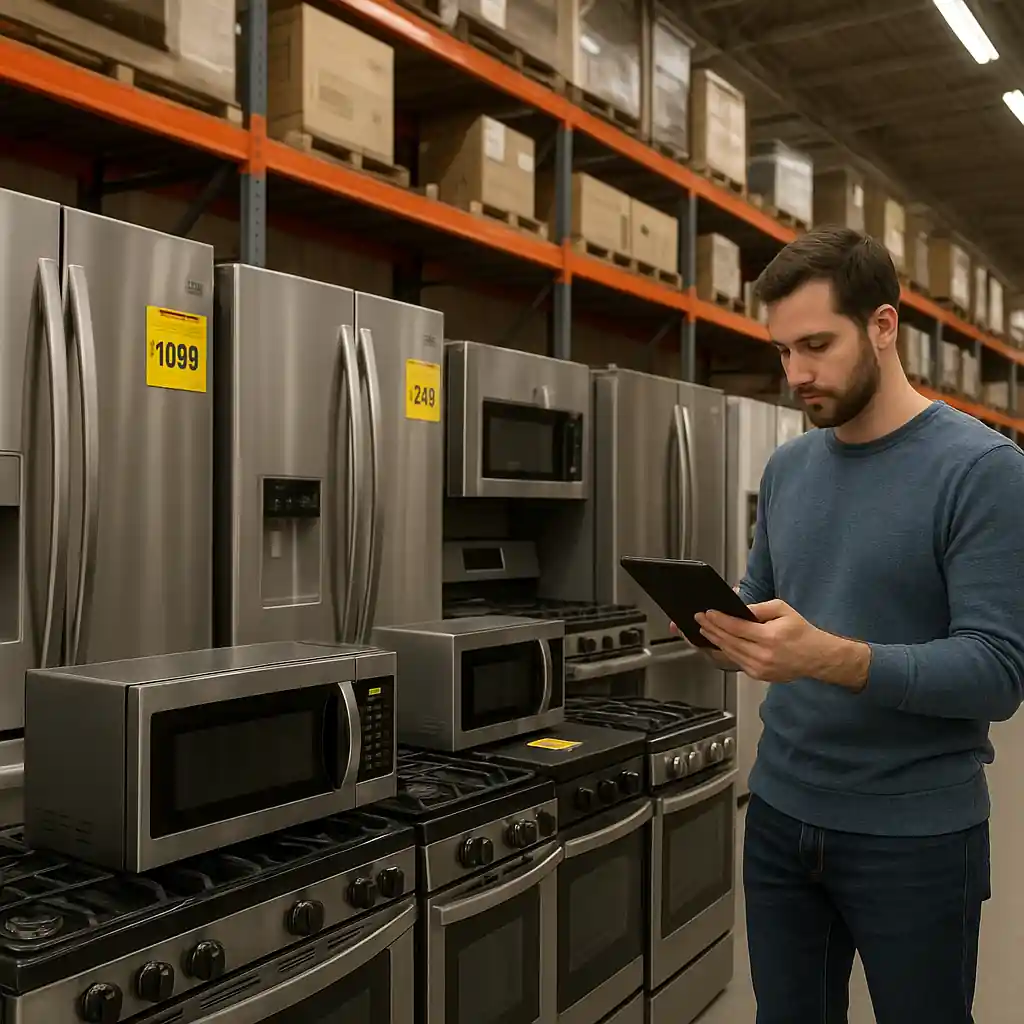
Quick Checklist
- Before buying, confirm the advertised Labor Day price on the product page and the sale ad fine print.
- Look for an “exclusions” note on the item—special-order SKUs and premium lines often show as excluded.
- Ask whether delivery, installation, or haul-away services are part of the advertised price or charged separately.
- Check manufacturer rebate windows and whether the sale price affects rebate eligibility.
- Compare the total out-the-door price (item + install + extended warranty + tax) rather than looking only at the sticker discount.
- Confirm return and warranty policies for sale items; some sale units have different restocking or warranty handling.
- Document the ad or price (screenshot or print) for price-match or post-sale appeals.
- If the model is excluded, ask about closeout or floor-model discounts that may apply outside the advertised sale.
Which Appliances Are Commonly Excluded
Home Depot typically discounts many standard appliances during the home depot labor day sale, but some categories and brands are frequently carved out. Knowing what to expect lets you avoid surprises at checkout.
- Premium or pro-level models: High-end ranges, commercial-style refrigerators, and pro-series cooktops are often excluded because manufacturers limit promotional pricing on those lines.
- Special-order and built-in units: Built-in refrigerators, paneled dishwashers, and custom ranges that require special ordering are commonly excluded from sitewide markdowns.
- New-release models: Recently launched appliances may be exempt while manufacturers establish list price.
- Floor models and clearance: Ironically, clearance items may already be deeply discounted and excluded from additional Labor Day promos—confirm whether further markdowns stack.
- Service-heavy bundles: Items sold only as installation bundles (like some HVAC or commercial kits) may be handled outside standard sale rules.
Step-by-step: How to verify if a specific appliance is excluded
- Find the exact SKU on the product page; check the product notes for “sale exclusions” or similar language.
- Compare the SKU price in your local weekly ad or the national Labor Day ad and confirm it matches the cart price.
- If unclear, call the store or use in-chat support and reference the SKU and ad week to get a written confirmation (screenshot or email).

How Installation, Delivery and Warranty Fees Are Handled
Installation and delivery are separate revenue lines and often excluded from headline appliance discounts. That means a 10–20% off sale on the appliance itself may not affect the labor or installation fees charged by Home Depot’s third-party installers.
Key points to understand:
- Delivery vs. installation: Delivery is usually a flat or distance-based fee; installation is a service priced by complexity (electrical work, gas lines, water hookups).
- Coupons and service charges: Most sitewide sales and coupons apply to the appliance MSRP but exclude installation and third-party service charges. Always confirm whether a coupon explicitly covers services.
- Extended warranties: The cost of extended protection plans is typically separate and rarely discounted during a sale event—sometimes manufacturer promotions reduce plan prices, but plan terms may differ for sale items.
- Haul-away fees: The advertised deal may or may not include old-appliance removal; check the cart options and order summary.
Step-by-step: Calculating the true total cost
- Start with the sale price for the SKU.
- Add delivery and installation quotes provided in the cart or by the service scheduler.
- Include any required parts (adapters, venting, electrical upgrades) the installer lists.
- Factor in extended warranty cost if you plan to buy one; divide that cost over expected years of ownership to compare value.
- Compare the sum to competitor offers that include installation or to a non-sale price + installer coupon to see which is cheapest.

Evaluating Value When an Appliance Isn’t Discounted
A non-discounted appliance on Labor Day can still be a good net value once you account for rebates, bundle pricing, and energy savings. Use this method to decide.
Three levers that can turn a non-discounted price into a smart buy:
- Manufacturer rebates: Some brands run mail-in or online rebates at specific times regardless of retailer markdowns; these can exceed the advertised sale discount.
- Bundle and trade-in credits: Bundles (range + hood, or washer + dryer sets) or haul-away credits can produce meaningful net savings even when the headline price is unchanged.
- Long-term energy savings: ENERGY STAR certified appliances often cost less to operate. Calculate expected annual energy savings using the appliance’s EnergyGuide; roll that into a 5–10 year ownership estimate. For more on efficiency, see ENERGY STAR.
Step-by-step: Net-value decision flow
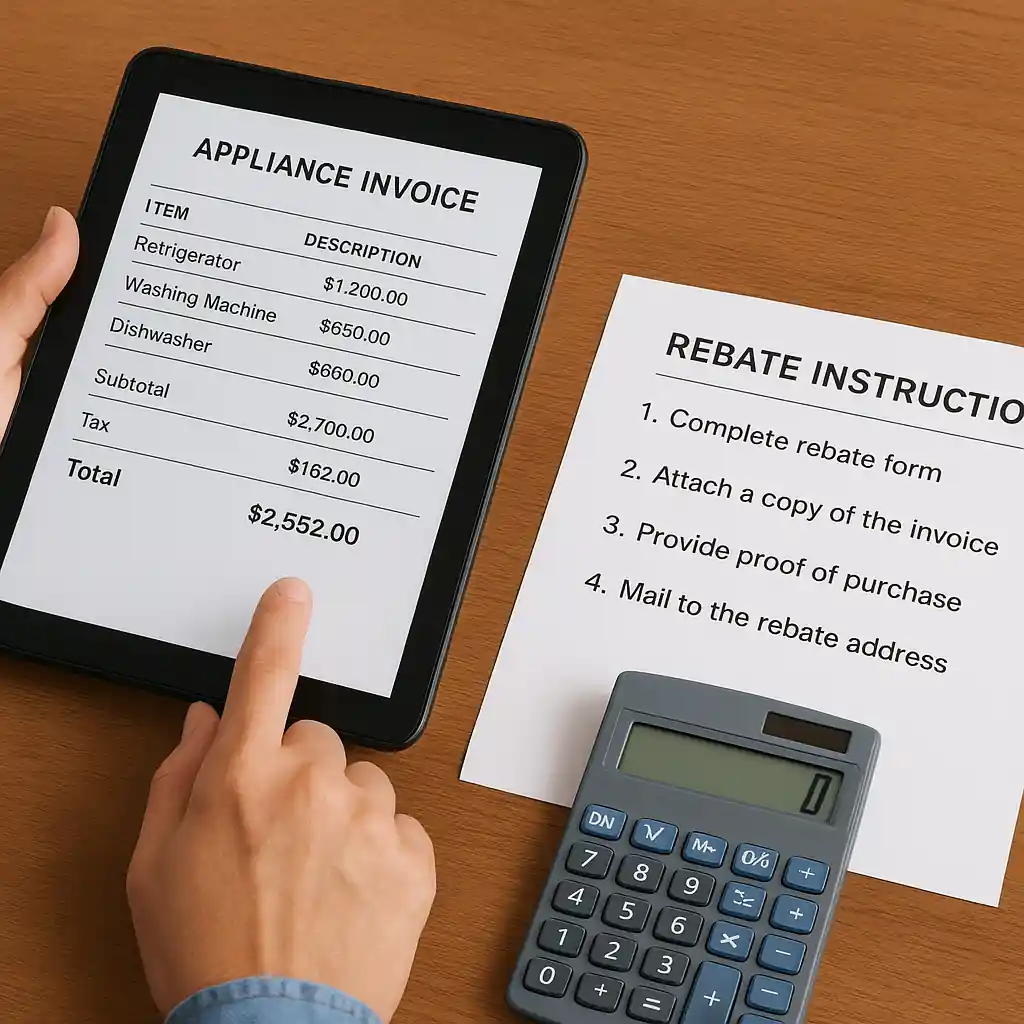
- Identify any current manufacturer rebates for the exact model and note the rebate deadline and submission requirements.
- Ask the Home Depot rep if a bundle or trade-in credit applies to this model during the Labor Day event.
- Add installer and warranty costs to the sale price, then subtract rebate amounts and trade-in credits.
- Estimate energy and maintenance savings over 5 years; include expected warranty repairs if data is available.
- If the final net cost is within your target range and the model fits your needs, proceed—or use the documented pricing to negotiate a price-match or manager discount.
Safety and recall checks: Before finalizing a big appliance purchase, especially at sale time, look up model safety notices. The U.S. Consumer Product Safety Commission provides searchable recall data that can affect the decision: CPSC.
Common Mistakes
- Assuming installation is included: Buyers who only look at the discounted sticker price often underestimate total cost by hundreds of dollars.
- Not checking SKU-level exclusions: Two visually identical fridge models can have different SKUs where one is on sale and the other is excluded—always confirm the SKU.
- Missing rebate deadlines: Waiting to file a manufacturer rebate or failing to include required proof voids the rebate and reduces net savings.
- Overlooking warranty differences: Warranty coverage on sale and clearance units can vary; some manufacturer warranties exclude floor or returned items.
- Neglecting long-term operating costs: Choosing the cheapest sticker price without checking energy efficiency can cost more over the appliance’s life.
- Failing to document the advertised price: If the online ad or in-store tag disappears, shoppers without screenshots lose leverage for price-match requests.
- Assuming all brands follow the same sale rules: Exclusive brand agreements or manufacturer marketing calendars can result in inconsistent exclusions across brands.
Related Guides
- Home Depot Labor Day Sale — the hub guide for full sale timing, category snapshots, and sitewide rules.
- Best Times to Buy Appliances at Home Depot — adjacent guide that explains seasonality beyond Labor Day.
- How Home Depot Appliance Bundles Work — explains delivery, hookup, and bundle pricing that often changes the net value.
Conclusion
Home Depot Labor Day sale ads deliver meaningful appliance discounts, but exclusions for premium lines, special-order SKUs, and service charges are common. Always calculate the total out-the-door cost—sale price plus installation, delivery, and warranty—then subtract rebates and bundle credits before deciding.
Next step: review the main Home Depot Labor Day Sale hub for the broader event timeline and category-level tips before you buy.