
This guide explains whether a home depot paint sale applies to custom‑tinted gallons and how common in‑store mixing or color‑matching fees can change your final price. You’ll get clear rules, practical examples, and a short checklist to confirm pricing before checkout.
Scope Boundary: This guide focuses on sale pricing and tinting/mixing fees for canned gallons and in‑store custom colors; it does NOT list current coupons, promo codes, or every brand on sale — for the full Home Depot paint sale overview see our main guide.
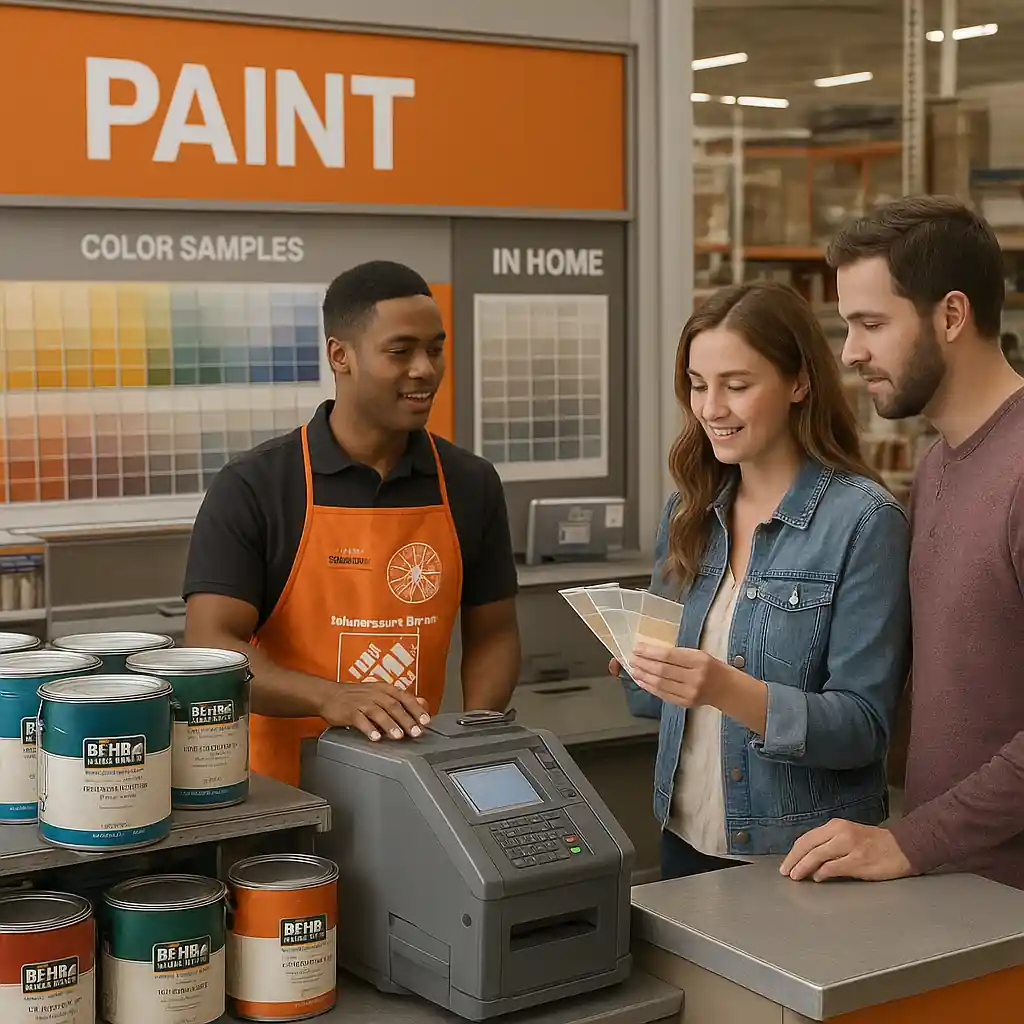
Quick Checklist
- Find the advertised sale price and note whether it labels a product as “in‑store mixing” or “stocked color.”
- Ask the paint desk if the sale price is for pre‑tinted stocked colors only or if it covers machine‑tinted gallons.
- Confirm any extra per‑gallon tinting fees, color‑match charges, or specialty finish surcharges in cents and dollars.
- Request a price check after the tint formula is entered but before the paint is mixed or charged.
- Check whether an online order will be mixed in a store or shipped pre‑tinted, and compare final totals with shipping and tax included.
- Keep the receipt and ask for manager review if the final charge doesn’t match the quoted total.
- If you plan rebates or manufacturer offers, verify that custom tinting doesn’t void rebate eligibility.
- Take a photo of the sale tag or weekly ad line item in case you need to dispute the in‑store charge.
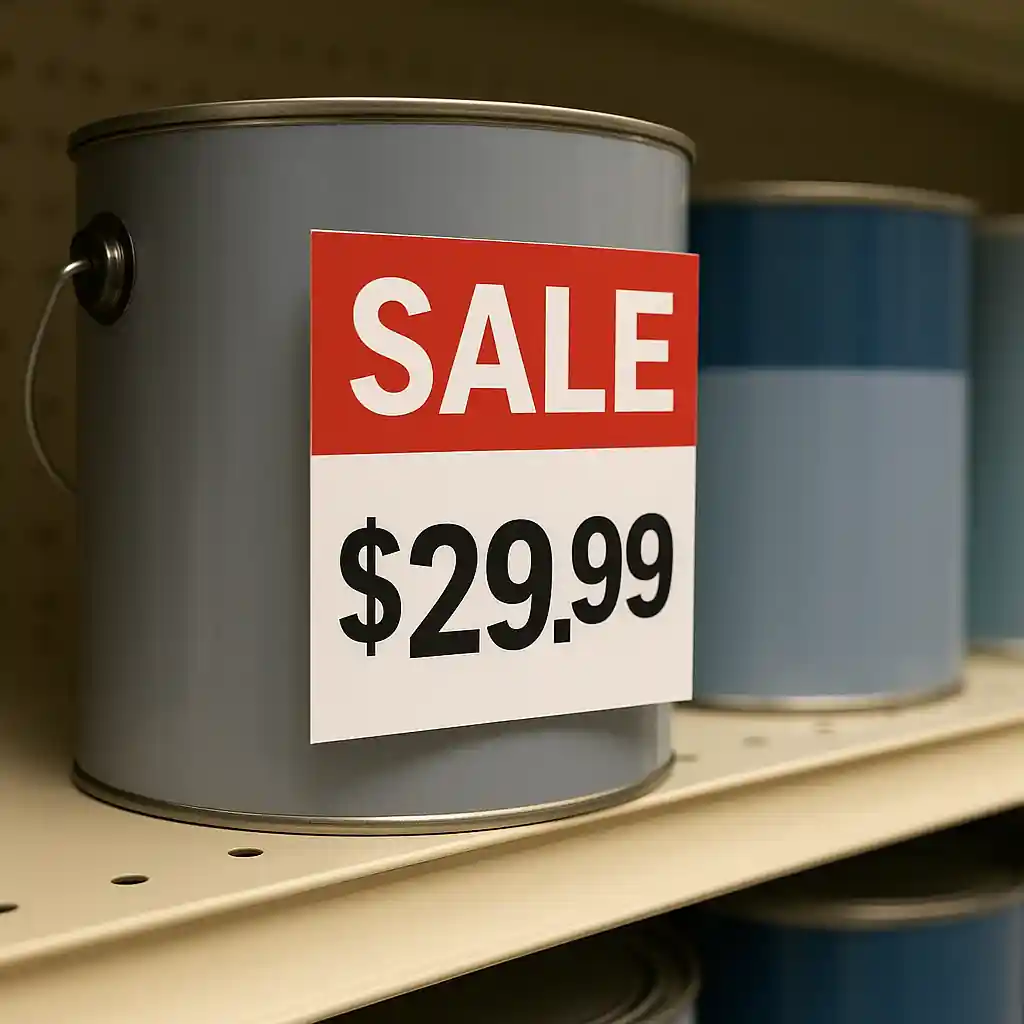
How sale pricing typically applies to custom‑tinted paint
Retailers like Home Depot usually advertise sale prices for a product SKU rather than a blank, pre‑tinted gallon. That means a sale price often applies to either:
- Stocked, factory‑tinted colors that are kept on the shelf at that price; or
- A base product (a gallon of paint before tint) with the understanding that in‑store machine tinting may add a per‑gallon cost.
In practice, during a home depot paint sale you should expect one of three outcomes at the paint desk:
- Stock price applies unchanged: The sale label applies to gallons in ready‑mix stocked colors — you pay the sale price and walk out with a shelf‑ready can.
- Sale price plus tint surcharge: The sale price applies to the base gallon, but tint machine additions increase the final price by a listed cents‑per‑ounce or flat tint surcharge.
- Sale excludes custom tinting: The sale explicitly covers only pre‑tinted products; any custom color uses a different SKU and the regular (non‑sale) price applies.
Which of these happens depends on the sale copy and local store policies. During promotional events Home Depot sometimes discounts specific branded pre‑tints or reduces the base product price and allows tinting on top — but that is not guaranteed.
Common additional charges and what they mean
Even when a sale covers the base product, expect at least one of these extra charges if you request a custom color:
- Tint volume charge: Many stores mix color by adding measured tint in machine doses. Stores may charge a per‑ounce or per‑dose fee when the formula requires extra pigment for deep or vivid colors.
- Color‑match or computer match fee: If a paint technician scans a sample and creates a custom formula, some locations add a small flat fee for the color‑matching service.
- Specialty finish surcharge: Metallics, faux finishes, or some high‑opacity tints can add a finish surcharge separate from tint volume.
- Disposal or equipment fee (rare): Occasionally applied for specialty mixing done outside normal service, though most routine mixes don’t carry this.
Because tinting formulas vary, two gallons of the same brand can end up differently priced when deep custom colors require much more tint. Ask the paint associate to show the formula’s predicted tint units and the exact surcharge before they mix.
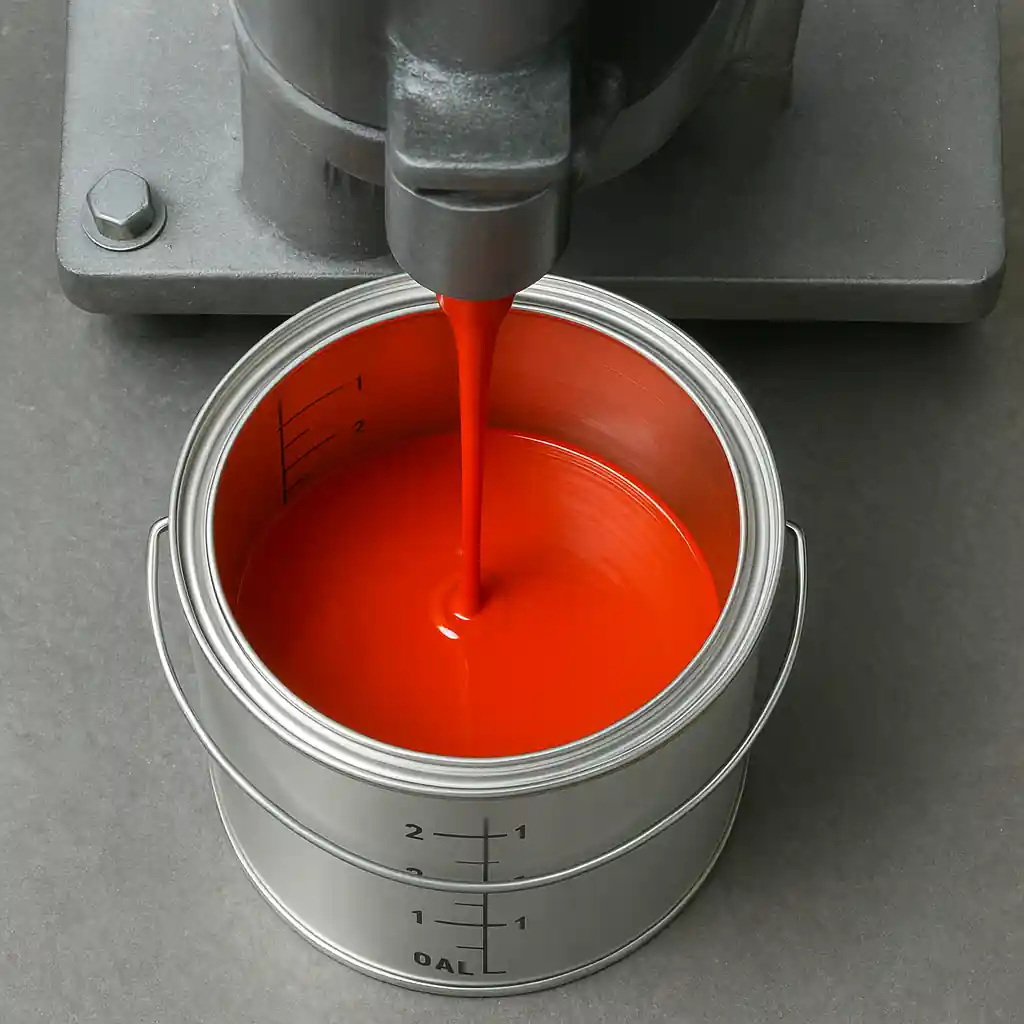
Stocked colors vs specialty colors — online orders vs in‑store mixing
Stocked colors (the most common neutrals and popular shades) are typically pre‑tinted and sold from store shelves at the tagged sale price. Specialty colors and custom matches usually involve machine tinting. Key differences:
- Stocked colors: Immediate pickup, sale price clear, no tint fees in most cases.
- Custom matches: Mixed on demand; price can change depending on pigment amount and whether a color‑match service was used.
- Online orders: Some online purchases let you choose a color that the fulfillment center will mix; shipping or local store pickup rules can affect whether the mix fee is applied before or after checkout.
Step‑by‑step flow: Confirming online vs in‑store mixing
- Choose the paint product on Home Depot’s site and note the sale price shown for the base SKU.
- Select your color: if it says “in‑store pick up” or “mixed at store,” assume local mixing and potential tint fees.
- Before finalizing payment, call or chat the local store’s paint desk with the product SKU and color name to confirm the final total including any tint fees and pickup/handling.
- If you prefer a guaranteed sale price, search for a stocked color tag in the product’s online color list or select a factory‑tinted option with a visible sale badge.
How to confirm the final price — step by step
Always get a concrete total before the can is mixed. Use this short procedure at the counter or over the phone:
- State the advertised sale price and the exact product name/SKU.
- Ask whether the sale price covers machine tinting and whether the color you want is a stocked color or a custom mix.
- If a custom mix is needed, request the tint formula and the exact dollar amount (or cents per ounce) the store will add.
- Ask for a written or verbal price check after the formula is entered but before mixing; if in store, have them scan the item to show the register total.
- Take a photo of the register screen or request a printed receipt showing the quoted price and any surcharges before the transaction completes.
Following these steps reduces surprises at payment. If the quoted final price exceeds what you were told, politely request a manager review and reference the sale tag or online listing.
Common Mistakes
- Assuming every sale price includes custom tinting — some promotions only apply to stocked, shelf‑ready colors.
- Not asking for a written price check after the tint formula is entered; verbal quotes are easy to misremember.
- Ordering online without confirming whether the fulfillment center or the local store will mix the paint, which affects fees.
- Picking an ultra‑deep or designer color without checking the expected tint volume — heavy pigments can add significant cost.
- Using generic product names instead of the SKU when asking for price confirmation; different SKUs have different sale rules.
- Failing to check rebate or manufacturer promo fine print — some offers exclude custom‑tinted gallons or require a specific SKU.
- Assuming price tags in the aisle are final — the register total after tinting can differ unless you verify before mixing.
- Not saving the receipt or a photo of the sale advertisement to support a price dispute if the final charge changes unexpectedly.
Related Guides
- Home Depot paint sale — our main hub for timing, categories, and how paint events work (start here for the broader topic).
- How to stack paint rebates with Home Depot sales — learn when rebates combine with sale pricing and custom mixes.
- Best paint brands to target during Home Depot sales — brand differences that affect tinting and surcharge behavior.
Conclusion
Short answer: sometimes. A home depot paint sale will frequently cover the base product, but custom tinting, color matching, and specialty finishes can add extra fees that change the final per‑gallon total. Always confirm whether the sale applies to stocked colors only or to machine‑tinted gallons and get a final price check before the can is mixed.
Next step: for timing, broad sale coverage, and which product SKUs usually go on discount, review our main Home Depot paint sale hub to plan your purchase.